Showing posts with label red grape starter. Show all posts

Tuesday, March 20, 2012

A Tale of 3 Yeasts: Days 2-10

Well I certainly feel like I've gotten a crash course in wild yeast production.  It is amazingly easy and also challenging.  Here are my results.

The rye starter went well.  For those who read the original post, the flour/potato water combo seemed quite dry so I did end up adding more water.  Each day for three days I threw out half the mixture and added new flour and new water (just plain tap water).  On the fourth day I transferred the rye mixture to a clean jar and continued feeding it daily with new flour and water.  Mmmm, bubbly...


The grape starter was a different story entirely.  After three days, the grapes were a moldy, moldy mess as pictured below.  I was on some wild yeast sites and there were varying opinions of the mold situation.  Some mentioned that a healthy yeast culture should keep mold away, some thought it should be thrown out, some thought grape starter was ridiculous because the yeast on the grapes was a different type of yeast than that used in bread making, and some said not to worry.  Not one to worry overly much about food, I soldiered on and poured the juice off the grapes, trying my best not to disturb my plentiful mold colony.  I even mixed in some flour and extra water and watched (and smelled) as it bubbled away for a day or so.  Then I threw it out.  I kept imagining newspaper headlines detailing my untimely death from my wild yeast experiment.  I need a bit more time on this earth thank you very much!


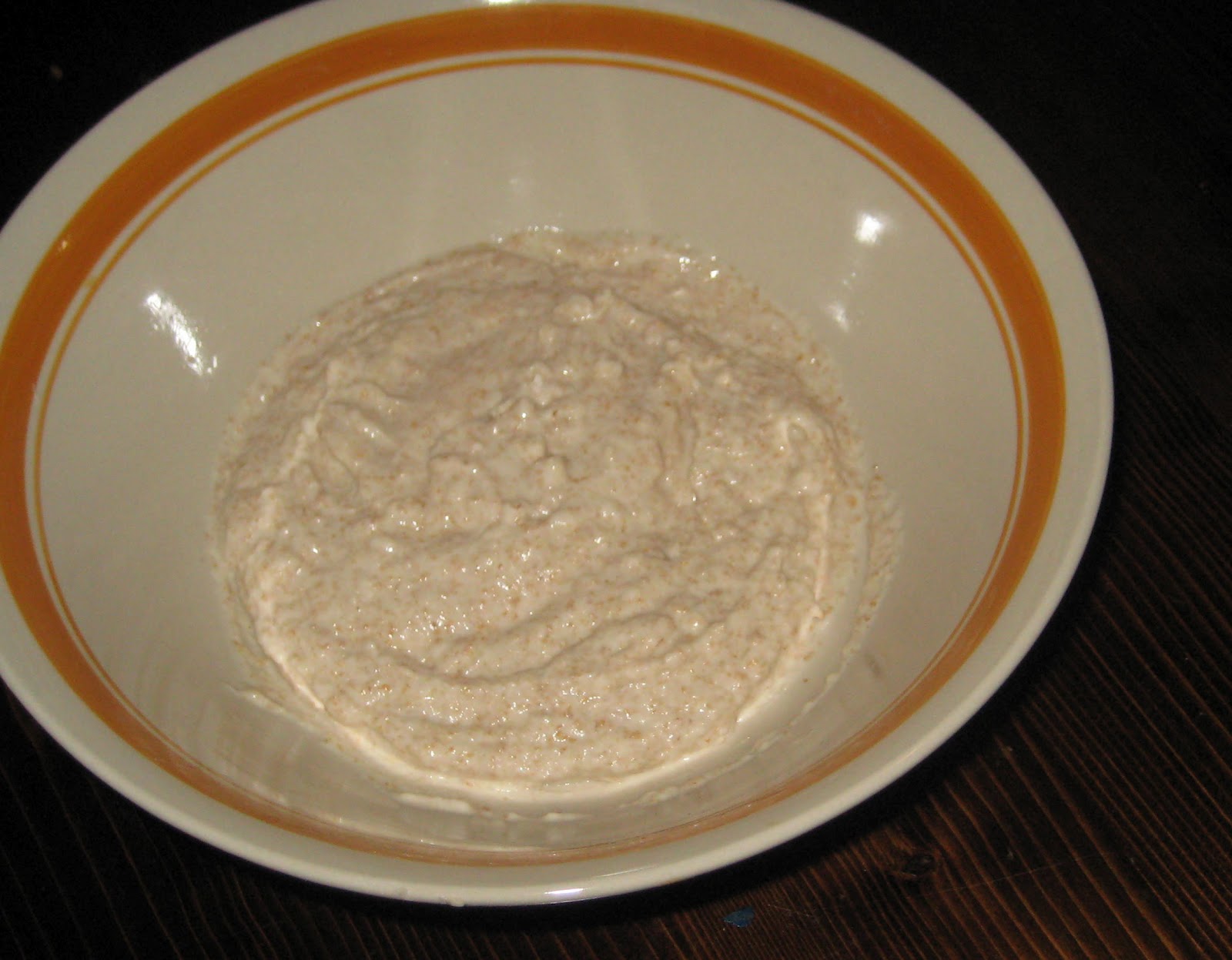
Finally, the honey starter.  I stirred the honey starter dutifully every day for five days before moving it to a jar and starting the feeding cycle.  It smelled nice and sour.  Doesn't the picture below look delicious???


Here are my two jars of wild yeast starter.  I am continuing the feeding cycle (once a day) and will put them in the fridge after a couple weeks so the flavours get a chance to mature.


A few notes on the process:
  • The culture is alive so it needs to be looked after.  Think of it as your pet in a jar!  Feed it every day if it is out of the fridge and every week if it is in the fridge.
  • Your wild yeast can have a wide range of smells.  From sourdough to acetone to alcohol, the scent changes tremendously depending on where you are at in the wild yeast cycle.  My rye starter is going through an acetone phase and the scent is intense.  I am continuing to feed and nurture it in the hopes that it will soon go back to a nice sour tang.  The lesson is don't give up on your starters!  Fiddle with them and consult the wild yeast community.
  • One lady online called her yeast a "monster," which I thought was hilarious so mine are now officially called monsters.  It suits them doesn't it?
  • I wouldn't bother with grapes in the starter because I don't think they're necessary.  All you really need is flour and water and perhaps a little honey.  Keep it simple!

Sunday, March 11, 2012

A Tale of 3 Yeasts: Day 1

My blog is really about getting back to the basics.  With all this talk of climate crises and overpopulation, I think it is wise to learn about food from scratch.  I started with meat, and as that journey continues, I am adding more.  Something I started thinking about the other day is bread.  What happens if I can't buy those neat little packages of instant yeast anymore?  Would that mean giving up bread and other yeast-based products?  Not on my watch.

Enter A Tale of 3 Yeasts.  Three methods of growing wild yeast from scratch.  Which will be successful?  Which will be the tastiest?  Stay with me to find out!

Before getting started, I thought it might be interesting to talk about yeast a little bit.  Yeast are single-celled organisms and the variety that is used in baking produces carbon dioxide - that is what makes your bread rise!  The yeast cells eat sugar to produce carbon dioxide so any wild yeast needs a sugar source to grow.

The root of the word yeast is "gyst" in Old English and it means to boil, foam, or bubble.  Yeast is ancient and has been found in Egyptian dig sites alongside mill stones and bake ware.  How amazing that bread has been around for that long?  Its role in the modern world is no less important and it has been commercially produced in Holland since the 1700's.

So yeast is an ancient ingredient, is it that hard to make?  I guess we'll see.  I am using three different recipes including a red grape starter, a rye flour starter, and a honey-wheat starter.  All of the recipes are simple and rely on time and warmth to grow the yeast.  The ingredients listed are the ingredients needed for the first day not the entire recipe.  Let's get started.


1 pound of grapes

Today all we are doing is stemming and crushing the grapes by hand.  Then they'll be covered with a piece of cheesecloth and put in a warm place for three days.  The recipe called for organic grapes but my local store didn't have any so I went for a conventionally grown purple seedless grape.  When you are picking out your grapes look for grapes with a nice white dusting on the skin - that is the start of the yeast that you will be growing.  


1/2 cup of rye flour
1/4 cup of potato water (water that potatoes have been boiled in and then cooled)

Mix the rye flour and potato water together.  Again cover the bowl, but this time with a damp piece of cheesecloth and set aside for 24 hours.  The potato water is not in the recipe, but there are naturally occurring yeast cells on the skin of the potato as well as simple carbohydrates that act as a sugar source so that is why I decided to use it instead of spring water.  This was really not very moist so I am interested to see how it turns out.


1/2 tsp honey (unpasteurized I would guess)
1/2 cup whole wheat flour
1/2 cup potato water (same as in the previous recipe)


Mix all of the ingredients together in a ceramic bowl and again cover and place in a warm spot.  This will need to be stirred twice a day for five days and then we will check back on it.  For the same reasons outlined in the Rye Flour Starter, I chose to use potato water.

Each of these starters is going to be ready at a different time.  The recipes range from 5 to 9 days.  As each starter is ready, I will make a loaf of sourdough bread to see which recipe gives me the best result.  

This is going to be one tasty experiment!

References:

http://en.wikipedia.org/wiki/Yeast